Call At 8887277097

VCB Service Lucknow

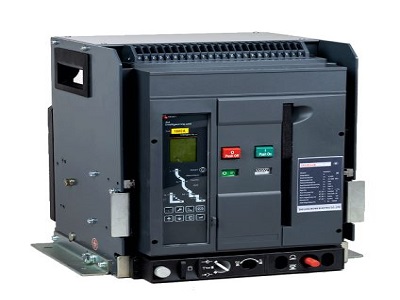
VCB Breaker maintenance and Repair

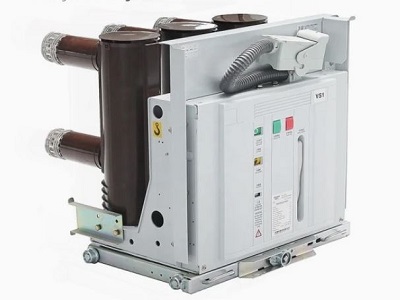
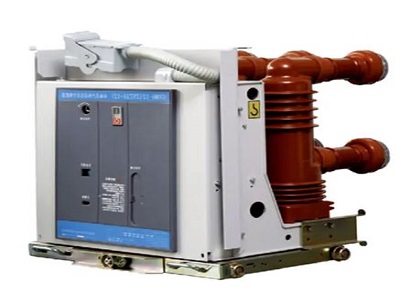
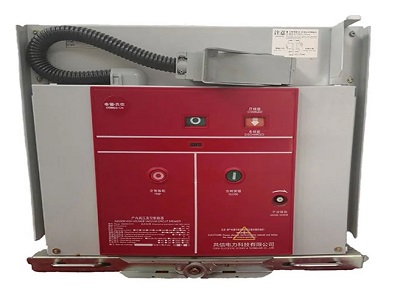
A safety feature that provides a certain amount of defense against overload, short circuits, and other issues with the electrical supply is a circuit breaker. The vaults are trusted with the duty of promptly resolving any issues that may arise. However, it will not be able to address the issue effectively and quickly if there is a circuit breaker issue. Circuit breakers must therefore be maintained. One of the most popular kinds of circuit breakers is the vacuum circuit breaker. The testing, upkeep, and troubleshooting procedures for vacuum circuit breakers will be the focus. To put it another way, this site serves as a one-stop shop for anyone in need of recent mv and hv vacuum circuit breaker maintenance. The smallest departure from anticipated performance indicates fundamental problems that need more research and fixing.


Vacuum Circuit Breakers servicing Design And Operation


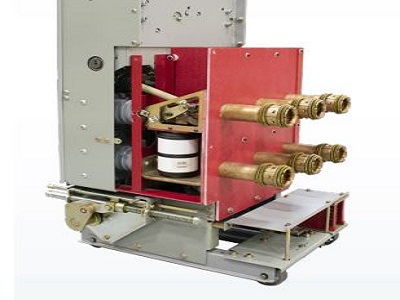
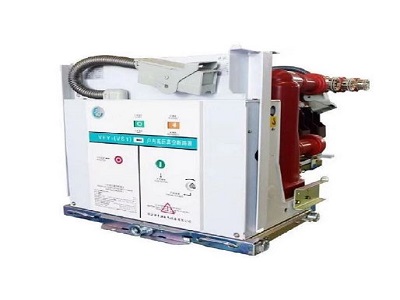
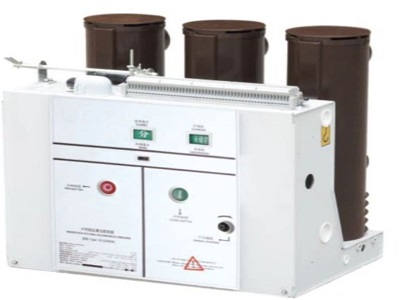
A vacuum circuit breaker extinguishes or extinctions an arc by using a vacuum. Moving contact, fixed contact, and an arc shield inside a vacuum interrupter or vacuum chamber are the standard components of a vacuum circuit breaker. Using both the mv and hv vacuum circuit breakers has several advantages. Among their many advantages are their long lifespan, small size, strong dielectric strength, lack of gas production, and safety against fire and explosion. They also operate in silence. The vacuum contactor units are located in a vacuum chamber of a vacuum circuit breaker. The ionization of the metal vapors of contact causes an arc to form when the two contacts separate and the circuit breaker is opened inside the contact vacuum. Since the created ionized metal vapors, ions, and electrons condense on the surface of the circuit breaker contacts, the vacuum rapidly extinguishes this arc, causing arc extinction. Because the dielectric strength recovers more quickly, the arc is extinguished as soon as it is created.


Even minor flaws must be ignored by technicians because they could still prevent future tripping functionality. Any issues found must be fixed right away with repairs or replacement parts in order to maintain ACB protection capabilities.

Upkeep and Examination

Vacuum circuit breakers are low maintenance, however while they are in service, dust and other environmental pollutants can build up on them. Combustible airborne contaminants can also cause damage to several circuit breaker components. Testing and maintenance become essential for many types of vacuum circuit breakers, including draw-out breakers, high voltage or medium voltage circuit breakers, and others. It is important to comprehend the vacuum circuit breaker maintenance procedure.


Check


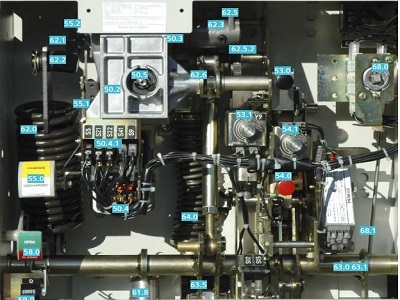
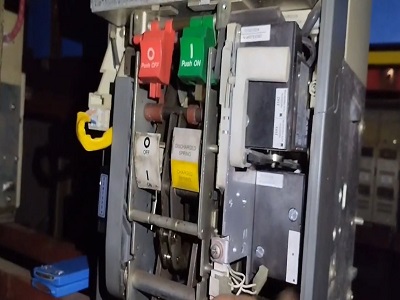
Testing is the initial phase, which enables us to determine whether anything needs to be repaired or replaced or if there are any significant flaws. Vacuum circuit breakers must pass a number of mechanical, optical, and other tests, all of which are covered in detail below. Visual Examination The most basic and important inspection is the visual one. It is possible to visually inspect a variety of components, including drive insulators and molded pole unit support, for dirt and cracking. In a similar manner, the integrity of the control circuit is wire and terminals can also be examined. There is a visual check to test for dust and grime in the functioning mechanism. Sometimes, in addition to visual inspection, one can also use their senses and feelings to examine the parts, such as to check the hardware or operational mechanism of a circuit breaker for tightness. Integrity Test of Vacuum Interrupters The internal dielectric strength and vacuum integrity determine how reliable a vacuum circuit breaker is. Vacuum interrupter testing is set up to verify both of them. Because a high potential is applied throughout the testing process, the vacuum circuit breaker testing method is often referred to as a hipot test. The insulation integrity between the main circuit terminals, between the main circuit and ground, and between the control circuit and ground is examined using this one-minute ac high potential test. While a break-down suggests that there is a defective interrupter or interrupters that need to be fixed or replaced, a successful withstand shows that the vacuum interrupters are operating properly. Check of the Mechanism The mechanism check is visually examining the mechanism to look for any loose components, including bolts and rings. Measurement checks, functional checks, operational checks, or a mix of these might be included as additional components of the mechanism check. In order to verify vacuum interrupters for the visibility of three contact erosion indicators and to measure contact wipes, a measurement check is necessary. A functional test is necessary to verify that a motor is operating smoothly. Likewise, both visual and functional inspections are necessary for excessive wear or distortion of the functioning mechanism. Closing, tripping the circuit breaker, or manual charging are occasionally used to verify that specific parts are operating correctly and smoothly.


Preventive Upkeep


It is time to put the ACB through a series of tests following the thorough cleaning and inspection stages. To ensure seamless operation, the operational mechanisms are tested. Tests of insulation resistance look for contaminants or other flaws in the material. Most importantly, however, tests for overcurrent and instantaneous tripping confirm that the breaker can quickly cut fault currents as intended. Whether it is high voltage circuit breaker maintenance or indoor vacuum circuit breaker maintenance, vacuum circuit breaker maintenance is simple and straightforward. To guarantee the circuit breaker operates smoothly for a longer amount of time, we must exercise caution when doing the maintenance operation. When it comes to vcb operation and maintenance, preventive actions might be regarded as crucial. Insulation Among the most basic maintenance methods is this one. Cleaning all of the insulating surfaces is considered insulation maintenance. To guarantee the smooth operation of the insulation surfaces, dust can be removed with any soft cloth, such as a dry paper towel or a dry lint-free cloth. The use of distilled water or a mild solvent can be used to remove dust and filth if wiping is not sufficient. Before putting the circuit breaker in use, make sure that every surface has dried completely after wiping. Before using the circuit breaker again, check for insulation damage and make sure all the wires are securely attached.
Whether it is high voltage circuit breaker maintenance or indoor vacuum circuit breaker maintenance, vacuum circuit breaker maintenance is simple and straightforward. To guarantee the circuit breaker operates smoothly for a longer amount of time, we must exercise caution when doing the maintenance operation. When it comes to vcb operation and maintenance, preventive actions might be regarded as crucial.

Insulation

Among the most basic maintenance methods is this one. Cleaning all of the insulating surfaces is considered insulation maintenance. To guarantee the smooth operation of the insulation surfaces, dust can be removed with any soft cloth, such as a dry paper towel or a dry lint-free cloth. The use of distilled water or a mild solvent can be used to remove dust and filth if wiping is not sufficient. Before putting the circuit breaker in use, make sure that every surface has dried completely after wiping. Before using the circuit breaker again, check for insulation damage and make sure all the wires are securely attached.

Lubrication

To guarantee the overall smooth and proper operation of every component of a vacuum circuit breaker and vcb maintenance, proper lubrication is needed on a regular basis. The frequency at which the circuit breaker is utilized determines how long between lubrications. Relubrication should generally be done once a year. A drop of light machine oil can be used as lubricant. To ensure that the oil is adequately absorbed into the components, the circuit breaker must be turned on and off multiple times after lubrication. A premium slow-oxidizing oil from the vacuum circuit breaker maker itself is included with roller bearings. They should therefore only be greased when necessary.

Troubleshooting- Closing Problem

If a particular component of the mechanism or control circuit cannot be closed, it must be replaced. Check the alignment or replace the breaker if it makes a closing sound but stays open. It has to be realigned or replaced if it closes without losing signal.

Troubleshooting- Tripping Operation

Replace the pieces of the control circuit or operating mechanism if they are unable to trip. In the event that the breaker trips but stays closed, a replacement is necessary. The answer to a trip without a tripping indication is also replacement.

Maintenance- Check

It is crucial that the vacuum circuit breaker be turned off before any maintenance services may be rendered. It should be cut off from all sides after turning off. To accomplish this, you must open the electrical isolator.

  • Use a CRC-226, or electrical contact cleaner, to thoroughly clean the vacuum circuit breaker. This will guarantee that the VCB is properly lubricated.
  • Empty the VCB of any leftover grease. Apply fresh, comparable grease to the VCB once again
  • Examine the state of the floating and fixed contacts
  • Examine the contacts' placement.
  • Verify that the VCB's outer covering and other hardware components are securely fastened.
  • To verify if the breaker is tripping, use the push button on the VCB.
  • Verify the electrical current flowing between phases, or the closed status of the VCB.
  • Verify the electrical current flowing between the earth and the phase, or the VCB closed status.
  • Verify the electrical current flowing between the earth and the phase, or the VCB in the open condition.


  • ACB Service

    Call At 8887277097 then repair or change as per need lubricate etc distinct compressed air design, ACBs extra maintenance. For the breaker to continue operating properly, any air leaks in the system must be located and fixed.the grading capacitors inspection for oil leaks.

    price :

    starts@ 1800/

    Phase Three phase
    Rated Voltage 690v
    No of pole 4 pole
    Breaking Capacity 100KA
    Panel Type ACB
    Service Provide Circuit Breaker Repairing Service
    Breaking Value 250KA/740 Volt
    Frequency 50Hz
    Location Lucknow
    available type of VCB SERVICE in lucknow
    Vacuum Circuit Breaker service in arjunganj lucknow

    VACCUME CIRCUIT BREAKER Commissioning

    price 12000

    View Full
    Vacuum Circuit Breaker service in alambagh lucknow

    11kv vacuum circuit breaker service

    price 5500

    View Full View Full
    Vacuum Circuit Breaker service in gosaiganj lucknow

    HT Circuit Breaker Maintainance Service

    price 8000

    View Full View Full
    Vacuum Circuit Breaker service in jankipuram lucknow

    Three phase vcb overhauling service

    price 5000

    View Full
    Vacuum Circuit Breaker service in mahanagar lucknow

    11kv circuit breaker lubrication servicer

    price 76000

    View Full
    Vacuum Circuit Breaker service in rajajipuram lucknow

    vcb coil repair service

    price 3,50,000

    View Full
    Vacuum Circuit Breaker service in bakshi ka talaab lucknow

    VCB Charging Discharging Repair

    price 5,00000

    View Full
    Vacuum Circuit Breaker service in deva road lucknow

    vcb service

    price 2,21000

    View Full